
Rule of thumb: if the part has moving mass, spring tension, or an electrical sensor, bring it up to current safety standards; if it's just old-looking trim, hardware, or a door style that still works fine, leave it alone.
That one sentence settles most of these arguments. The exceptions are where people get stuck, so here's the plain breakdown.
The Opener Is Not Optional
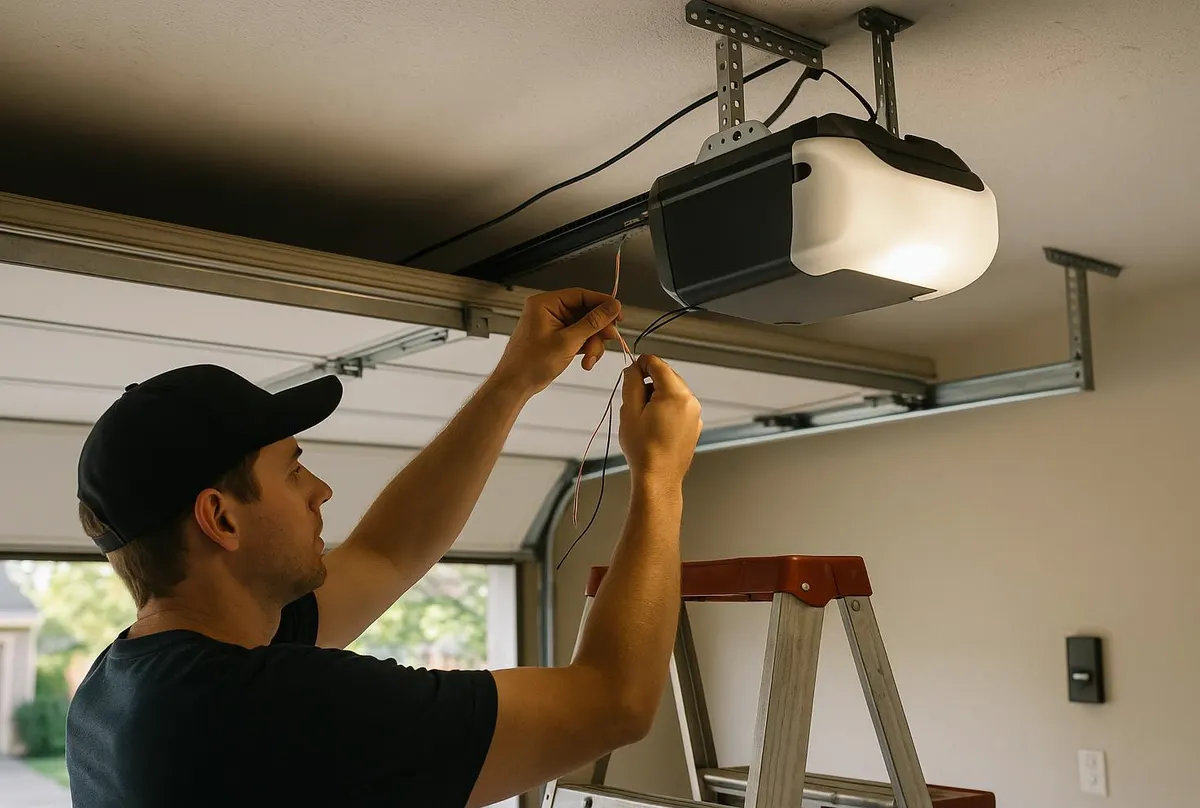
If your garage door opener was installed before 1993, it almost certainly lacks two things that are now federal safety requirements: photo-eye sensors (the two little boxes near the floor on each track) and mechanical auto-reverse. Without them, a door closing on a pet, a kid's bike, or someone's foot will not stop or reverse. This isn't a style preference you can keep for nostalgia. If you don't see sensors, or the door doesn't reverse when you hold a 2x4 flat on the ground under it as it closes, that opener needs to be replaced, full stop.
This is also one of the most common jobs we do: a straight-up garage door opener installation swap, keeping the rest of the door system intact if it's otherwise sound.
Springs Age in Cycles, Not Years
A torsion or extension spring doesn't have an expiration date tied to the calendar — it has a cycle count, usually rated for 10,000 to 15,000 open-close cycles. A door used a few times a day for twenty-plus years has likely burned through that rating even if the spring looks fine. Humidity here speeds up fatigue and corrosion on the coils, especially if the garage isn't climate controlled. If you can see rust pitting, hear a grinding or popping sound, or the door feels heavier to lift manually than it used to, the spring is telling you it's near the end. This is a straightforward garage door spring repair, and it's not a DIY job — these springs are under enough tension to cause serious injury if they let go while you're working on them.
Wind-Load Bracing: The One Hurricane-Season Catch
Older doors, especially ones installed before wind-load codes tightened up in hurricane-prone parts of Florida, often don't have the reinforced struts or track bracing that newer doors use to resist being pushed in or sucked out during high winds. This matters here because garage doors are one of the most common failure points in a storm — once wind gets inside a garage through a blown-in door, it can take pressure on the roof from the inside. If your door predates modern wind-load standards and you're in exposed areas near the coast or open fields, this is worth having checked before the tail end of this hurricane season passes and well before next year's storms build up. A technician can often retrofit horizontal bracing and heavier end hinges without replacing the whole door — but if the panels themselves are thin or warped, retrofitting bracing onto a weak panel doesn't solve the real problem.
What This Looks Like in Practice
- Door flexes or bows visibly in strong wind gusts
- No horizontal retrofit struts on the inside of the panels
- Track anchored with short or rusted lag screws instead of through-bolts
- Door has never been inspected for wind rating since installation
Panels, Rust, and Swelling: Mostly Cosmetic, Sometimes Not
Humidity and salt air cause two different problems that look similar but aren't equally urgent. Wood panels swell and stick in damp weather, then shrink back when it dries out — annoying, but not dangerous unless the swelling has warped the panel enough that it's binding in the track and straining the opener motor. Rust on steel panels or tracks is more serious if it's at a hinge point, a roller bracket, or anywhere load is carried; surface rust on the face of the door is cosmetic and can be sanded and repainted. If a panel is cracked, delaminating, or rusted through at a structural point, a garage door panel replacement is usually cheaper and safer than patching it, since you can swap just the damaged sections instead of replacing the whole door.
What's Genuinely Fine to Leave Alone
Not everything old is a hazard. A manual lock bar that you still use correctly, original decorative hardware, a vintage color or panel style, or an older but well-maintained track system that isn't off-track and doesn't bind — none of that needs to change just because it's old. Spending money retrofitting things that already work is money that could go toward the spring, opener, or bracing issues that actually carry risk.
When to Call Inglis Garage Door Experts
If your opener predates 1993, if a spring looks rusted or sounds off, or if you're not sure whether your door has adequate wind-load bracing before storm season wraps up, that's exactly the kind of call worth making. We can run a full garage door maintenance inspection, tell you honestly which parts are safety issues versus cosmetic, and handle anything from a garage door opener installation to spring repair or panel replacement — without pushing you to replace a door that's still doing its job.
If you're anywhere in Inglis, Yankeetown, Crystal River, Homosassa, Dunnellon, Chiefland, Williston, or Bronson and you want a straight answer on what your older garage door actually needs, call Inglis Garage Door Experts today and get it settled before the next storm rolls through.