
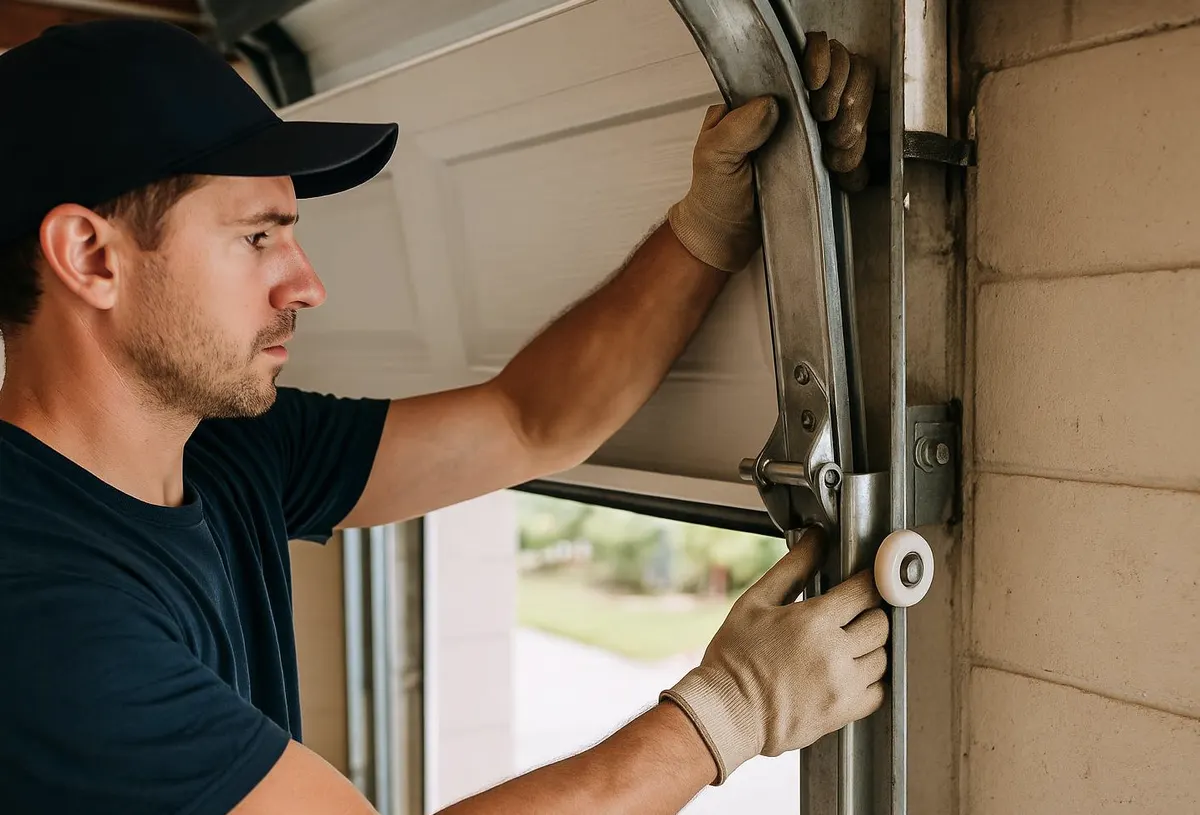
Disconnect the opener, lift the door to about waist height by hand, and let go. A balanced door stays put. If it drops or shoots upward, the springs are no longer carrying their share of the weight — and your opener has been quietly picking up the slack, probably for months.
Why This Test Matters More Than It Sounds
Garage door openers are built to move a door, not lift it. The springs are supposed to do almost all the heavy work; the opener just provides motion. When springs weaken or go out of adjustment, the opener's motor and gears start compensating every single time the door runs. That's extra strain on a drive gear, extra heat in the motor housing, and extra wear on the trolley and rail. It's one of the fastest ways to turn a $150-$300 opener repair into a $300-$500 full opener replacement.
In this part of Florida, humidity swings matter too. Wood and composite doors absorb moisture during the wet season and swell slightly, changing how much weight the springs need to counterbalance. Salt air near the coast speeds up spring corrosion unevenly — one coil can weaken faster than its neighbor, which throws off balance even on a door that's only a few years old.
What You Need
- A step stool if your release cord is high up
- A flashlight
- Work gloves (optional, but the tracks and edges can be sharp)
- No ladders on the springs themselves — that part is not a homeowner task
Step-by-Step: Testing Balance
- Close the door completely. You want to start from a known, fully-seated position.
- Pull the emergency release cord (the red handle hanging from the trolley) to disconnect the door from the opener. This isolates the door's own weight and spring tension from any motor assist.
- Lift the door by hand to roughly waist height, moving slowly and steadily.
- Let go and watch what happens. A properly balanced door will hold its position, maybe drifting an inch or two. A door that falls shut or jumps upward on its own is unbalanced.
- Repeat the check at a quarter-open and three-quarter-open position. Some doors feel fine at one height but reveal uneven spring tension at another — this is common when one torsion spring is more corroded or fatigued than the other.
- Reconnect the opener by pulling the release cord again (or following your opener's reset instructions) once you're done testing.
What You Can Check Yourself vs. What Needs a Technician
Homeowners can safely run the lift test above, and do a visual check of the springs — look for visible rust, gaps between coils, or a spring that looks stretched compared to its pair. You can also listen for strain: an opener that groans, slows down mid-cycle, or reverses unexpectedly during closing is often fighting bad balance, not a bad sensor.
What you should not do is adjust spring tension yourself. Torsion springs are wound under extreme tension and are involved in most serious garage door injuries reported each year. Setting the correct tension also requires matching it to the door's exact weight, which varies by material and any added hardware like wind-load bracing common on doors built for hurricane season. That calibration work, along with actually swapping a worn spring, is technician territory.
When to Call Inglis Garage Door Experts
If your door fails the balance test, or the opener has been working harder and louder for a while, it's worth getting it looked at before a cable snaps or the opener's gear strips. Our garage door spring repair service includes testing both springs individually, replacing whichever side has lost tension, and rebalancing the whole system to the door's actual weight. We also handle garage door maintenance visits that catch early corrosion from salt air or humidity swelling before it turns into a balance problem at all.
If your door in Inglis, Yankeetown, Crystal River, or anywhere else in Levy County is starting to feel heavy, loud, or uneven, give Inglis Garage Door Experts a call — we'll run the diagnostics and fix it before it costs you an opener.